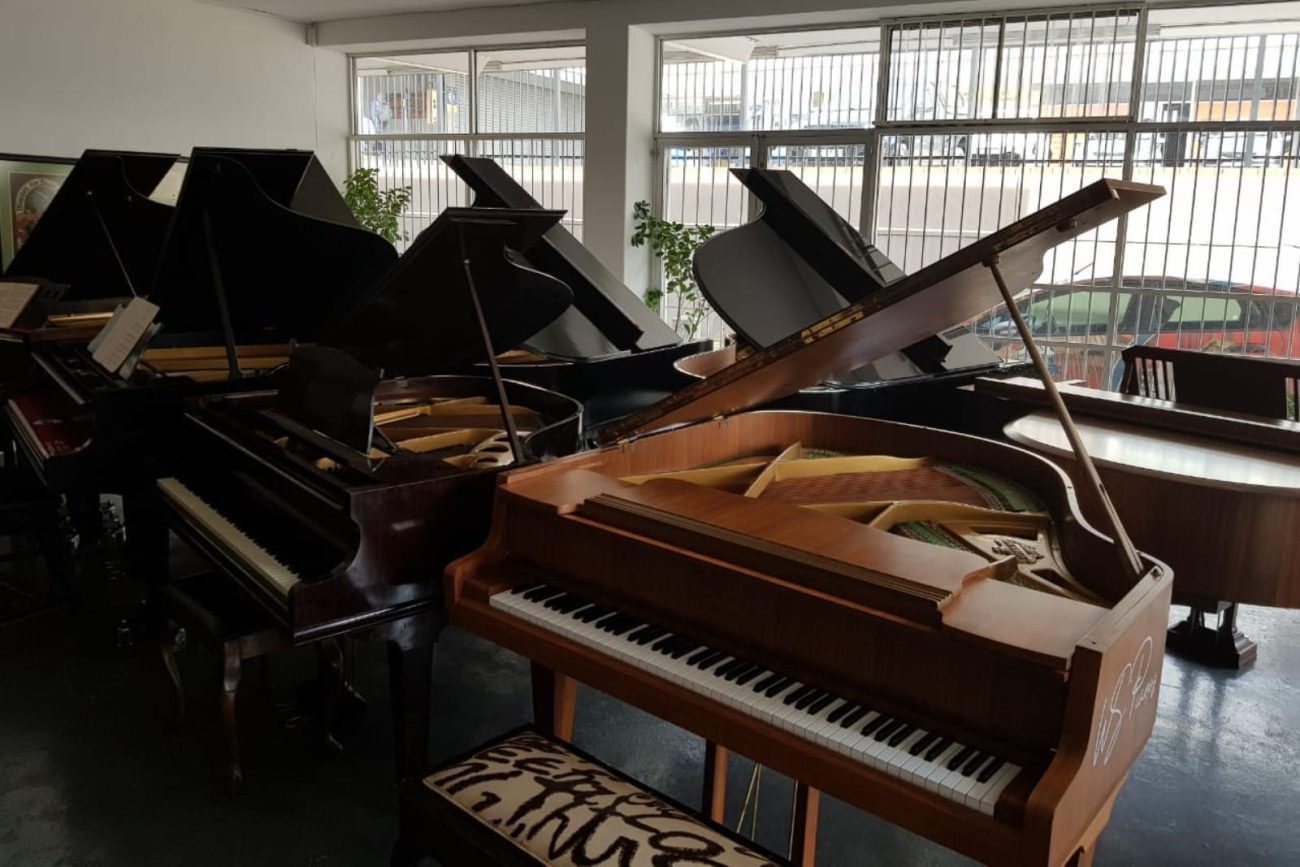
Over 130 Years of Professional Piano Tuning & Repair in Greenville, Spartanburg & Inman, SC
WS Pianos provides expert piano tuning, piano repair, and piano restoration services across Greenville, Spartanburg, and Inman, South Carolina, bringing over 130 years of Stolze family craftsmanship to every instrument.
Get the right piano for you
Widest variety in Africa to choose from
Fully serviced and tuned
What We Offer
Our piano services help homeowners, schools, churches, and musicians across Greenville, Spartanburg, and Inman, SC keep their instruments performing beautifully.
Piano Tuning
Perfect pitch, every time
Repairs & Regulation
Smooth play, reliable tone
Restoration & Rebuilding
Legacy instruments revived
Valuations & Sales
Honest assessments &
reconditioned pianos

ABOUT
A Family Devoted to the Piano
European expertise, American service.
WS Pianos is led by Werner and Naomi Stolze, a husband-and-wife team bringing four generations of piano mastery to the USA. Every service reflects their commitment to quality, tradition, and personal care.
Today, WS Pianos proudly serves piano owners throughout Greenville, Spartanburg, and Inman, South Carolina, continuing a Stolze family legacy of craftsmanship dating back to 1889.
MEET WERNER STOLZE
South Africas’ Leading Piano Man
I get it, to find the perfect piano is hard, to find the right person to buy it from is even harder, not to mention having it maintained.
You can trust us to help you find the perfect piano for you, because not only am I a 4th generation piano builder but I am also the ONLY active and qualified piano builder in Africa.
My family and I also own a piano factory in Germany which was established in 1919, you could say that pianos have been a “key” part of my life.
We also have branch in Mauritius that service Seychelles, Madagasscar, Reunion, and the Comoros Islands
Werner regularly works with private clients, schools, and performance venues throughout Greenville, Spartanburg, and Inman.

Expert Repairs
Bring your piano back to life. From sticky keys to deep structural issues, we restore even “unfixable” pianos with care and precision.

Quality That Lasts
Built to endure. Our restorations are meant to last. Most clients won’t need major repairs again for 10+ years.

Tuning & Maintenance
Stay in tune, stay inspired. We offer professional tuning and minor repairs onsite, major work can be done in our workshop
Areas We Serve
WS Pianos proudly provides professional piano tuning, repair, restoration, and evaluations throughout Greenville, Spartanburg, Inman, and surrounding areas of South Carolina.

Primary Service Area
- Greenville SC
- Spartanburg SC
- Inman SC
- Greer SC
- Duncan SC
Extended Service Area
- Asheville NC
- Hendersonville NC
- Western North Carolina
- Columbia SC
- Charlotte NC
(special appointments)
Customers That Trust Us
What to expect
Simple, Stress-Free Piano Care

Step 1: Reach Out
Phone, email, or form

Step 2: On-Site Evaluation
Honest, pressure-free feedback

Step 3: Expert Service
Tuning, repair, or full restoration

Step 4: Support
Advice, follow-ups, and care
Our Commitment to Quality and Satisfaction
5 Year Guarantee
We stand behind the quality of our pianos and offer a 5 year guarantee to ensure your complete satisfaction.
Delivered in Top Condition
Quality Parts from Germany
We use only the best quality parts from Germany to ensure the longevity and performance of your piano. From the keys to the soundboard, we spare no expense in sourcing the highest quality materials.
BLOG
From the Workshop
Tips, stories, and piano wisdom.
Unveiling the Secrets of Pianos: Exploring Frequently Asked Questions
Publication: Blog Published: May 2024 By: Naomi Stolze Unveiling the Secrets of Pianos: Exploring Frequently Asked Questions Part 1 At WS Pianos, we take pride in our rich heritage, with one of our directors hailing from a long line of piano builders. As a reputable…
Buying a piano is an investment
Publication: Blog Published: June 2019 By: Naomi Stolze Piano tuning is the art of making minute adjustments The well-established and reputable WS Pianos should be your first port of call for any piano repairs, sales, tuning, restoration, transport, evaluations, and…
Adoption, Autism & everything in between
Publication: Blog Published: May 2019 By: Chanel Serfontein Emma was our child Family has played a major role in the creation and history of WS Pianos and has always been a focal point in terms of how owners Werner and Naomi live their lives. Therefore, it came as no…
Years of Piano Craftsmanship
Generations of Stolze Family Expertise
Pianos Restored & Tuned

Full Restoration
Bring Your Piano Back to Life
At WS Pianos, restoration is more than repair, it’s a revival. Whether your piano is a family heirloom, a vintage find, or a silent centerpiece, we return it to full structural, visual, and musical integrity. Every rebuild is handled by a certified master builder, with care that honors your piano’s past and protects its future.
We don’t just fix what’s broken, we preserve what matters.
We believe that you should be able to obtain the best piano for the best price
Testimonials
What Our Customers Say
Trusted by piano owners across Greenville, Spartanburg, and Inman.
I am all about GREAT service. Thank you!!! WS Pianos just delivered by 67-year-old Piano! Hassle free end effortless. Highly recommended.
It is our honour and pleasure to write this for Naomi & Werner Wilfried Stolze owners of WS Pianos. They were a game changer in the World Choir Games 2018. Their commitment was phenomenal and was always available to assist when needed.
You made me so happy when you said you can save my piano while previous tuner wrote it off. Sorry for the tears it was tears of joy.
faq
Frequently Asked Questions
How difficult is Piano Tuning?
Tuning a piano is a delicate task that requires more than simply adjusting the tuning pins. Piano strings are under a greater amount of tension than guitar strings, which means that stabilizing the pitch requires more finesse. Inexperienced tuners risk breaking the strings, which can require additional parts and expertise to fix.
How difficult is Piano Tuning?
Tuning a piano is a delicate task that requires more than simply adjusting the tuning pins. Piano strings are under a greater amount of tension than guitar strings, which means that stabilizing the pitch requires more finesse. Inexperienced tuners risk breaking the strings, which can require additional parts and expertise to fix.
Can a Piano ever become un-tunable?
A piano that is old, poorly manufactured, or neglected may become untunable, but this is usually a repairable problem.
Can playing the Piano alter your Brain?
Playing the piano has positive effects on the brain, as studies show that it stimulates the brain in unique ways. When playing the piano, the brain forms new neural connections, which improves overall communication and can increase intelligence by up to 10%.
Is it worth repairing a Piano?
The decision to repair a piano depends on its condition, value, and sentimental value to the owner. If the piano’s iron frame is cracked or the cost of restoration exceeds the value of the piano, it may not be worth repairing. However, in most cases, restoration is cheaper than buying a new German-crafted piano of comparable value. If the value of restoration is high and there is no sentimental attachment to the piano, purchasing a fully restored/refurbished piano or a new piano may be recommended.
What factors influence the value of a piano?
The value of a piano is influenced by several important factors, including maintenance, size, age, location, design, materials and manufacture, set up, and brand.
Maintenance is crucial as the quality of maintenance affects a piano’s performance, and a poorly maintained piano will have a lower value. Size is also important, as larger pianos generally have a better sound, more dynamic range, and better projection, resulting in a higher value. Age has a significant impact on a piano’s value as they inevitably deteriorate over time, although the rate of depreciation depends on the piano’s quality and care.
Location is another important factor as a piano’s environment can affect its condition, and exposure to elements like humidity or being near the ocean can lower its value. The design of a piano’s mechanical components and structure also plays a critical role in determining its tone potential and value.
The materials and manufacturing quality of a piano and the standards used during servicing and rebuilds are also important. Poor quality materials and inadequate technical standards can lower a piano’s value. The set-up is also crucial, as even a high-quality instrument can sound bad if not regulated, voiced, and tuned properly.
Finally, brand value is dynamic and can fluctuate depending on manufacturing and marketing. Strong brands generally have better value retention, but some lesser-known brands can still be good instruments. In modern piano manufacturing, there are fewer manufacturers, and strong brands have a more dominant position.
What factors influence the value of a piano?
The value of a piano is influenced by several important factors, including maintenance, size, age, location, design, materials and manufacture, set up, and brand.
Maintenance is crucial as the quality of maintenance affects a piano’s performance, and a poorly maintained piano will have a lower a value. Size is also important, as larger pianos generally have a better sound, more dynamic range, and better projection, resulting in a higher value. Age has a significant impact on a piano’s value as they inevitably deteriorate over time, although the rate of depreciation depends on the piano’s quality and care.
Location is another important factor as a piano’s environment can affect its condition, and exposure to elements like humidity or being near the ocean can lower its value. The design of a piano’s mechanical components and structure also plays a critical role in determining its tone potential and value.
The materials and manufacturing quality of a piano and the standards used during servicing and rebuilds are also important. Poor quality materials and inadequate technical standards can lower a piano’s value. The set-up is also crucial, as even a high-quality instrument can sound bad if not regulated, voiced, and tuned properly.
Finally, brand value is dynamic and can fluctuate depending on manufacturing and marketing.
Strong brands generally have better value retention, but some lesser-known brands can still be good instruments. In modern piano manufacturing, there are fewer manufacturers, and strong brands have a more dominant position.
Do you offer piano tuning in Greenville, Spartanburg, or Inman?
Yes. WS Pianos provides professional piano tuning, repairs, and restoration services throughout Greenville, Spartanburg, Inman, and surrounding areas in South Carolina.
What are the differences between an 85-key piano and an 88-key piano, and how will it affect my playing?
Many people are hesitant to purchase an 85-key piano, but there is no reason not to! Music composed prior to the 20th century only utilized 85 keys, and it wasn’t until the late 19th century that pianos began to be manufactured with 88 keys. The vast majority of piano music can be played on an 85-key piano, and you will still have a beautiful instrument even if you occasionally encounter a piece with higher notes.
If I move my piano, will it require tuning?
Not necessarily. While physical motion can cause a piano to go out of tune, the main reason it may need tuning after a move is due to changes in humidity levels in the new environment. It can take several weeks for the piano to react to these changes, so it’s recommended to wait before scheduling a tuning.
How often should a piano be tuned?
The frequency of tuning depends on the level of use, the environment, and budget. It’s advisable to have a minimum of one annual tuning to prevent the tuning from drifting too far from true and to check the overall condition of the instrument. On average, regular clients have their piano tuned every 6 months, and it’s also appropriate to tune it every 3 months to coincide with the seasons. There’s no harm in tuning a piano too often.
What is the average time it takes to tune a piano?
The time it takes to tune a piano can vary depending on the individual tuner, and should not necessarily be judged based on the amount of time spent at the piano. The most important factor is whether or not the piano sounds and feels great after the tuner has finished. Some tuners may spend more time at the piano due to distractions such as phone usage or chatting, which can result in higher fees for the customer.
Is an acoustic or electronic piano the better option?
An acoustic piano typically has a longer lifespan than an electronic piano, especially if it is well-maintained with regular tuning (at least once per year) and servicing every 5-7 years. On the other hand, an entry-level digital piano may only last 3-7 years and can be vulnerable to electrical damage.
The sound produced by an electronic piano is created by digital sound files played through an electric switch, resulting in a deficit in sound quality compared to an acoustic piano. The dynamics of an electronic piano’s sound file remain constant, while the dynamics of an acoustic note can vary based on the player’s touch and style, allowing for more musical expression.
Furthermore, the complex sustain and colorful timbre changes of an acoustic piano cannot be replicated by an electronic keyboard.
Playing an acoustic piano can also provide physical benefits, such as building strength and technique in the player’s hands, as the hammer strikes the string with varying degrees of velocity based on the player’s touch. In contrast, a digital piano simply lowers a weight with no variation in force, potentially leading to weaker hand muscles and poor technique.
In addition, the key playability of digital keyboards can be inconsistent, whereas high-quality acoustic pianos provide consistent note production across the entire key surface.
Overall, due to its superior sound quality, greater potential for musical expression, and physical benefits, an acoustic piano is generally considered the better option for serious pianists.
What’s the difference between an 85 and 88-key piano?
Many people are hesitant to purchase an 85-key piano, but there is no reason not to! Music composed prior to the 20th century only utilized 85 keys, and it wasn’t until the late 19th century that pianos began to be manufactured with 88 keys. The vast majority of piano music can be played on an 85-key piano, and you will still have a beautiful instrument even if you occasionally encounter a piece with higher notes.
Ready to Restore Your Piano?
Serving Greenville, Spartanburg & Inman, South Carolina